Hiking Durmitor National Park, Montenegro: The Ultimate Outdoor Adventure Guide
June 23, 2026/
Hiking Durmitor National Park, Montenegro: The Ultimate Outdoor Adventure Guide
In the rugged north of Montenegro, Durmitor National Park rises into a wall of limestone peaks, glacial lakes, and pine forest that locals simply call “the mountain.” A UNESCO World Heritage Site since 1980, the park protects 48 peaks over 2,000 meters, eighteen glacial lakes known as “gorske oči” — mountain eyes — and one of the deepest river canyons in Europe.
This guide breaks down the best hiking trails in Durmitor National Park, from the easy lakeside loop around Crno Jezero to the demanding scramble up Bobotov Kuk, Montenegro’s second-highest peak, along with where to base yourself, what to pack, and when to go. By the end, you’ll know exactly how to plan a hiking trip into one of the Balkans’ wildest and most dramatic mountain landscapes.
1. Getting to Durmitor National Park and Where to Base Yourself
Durmitor sits in northern Montenegro, roughly 2.5 hours from the capital Podgorica and about 3 hours from the coastal town of Kotor by car.
Best Base Town:
Žabljak: The highest town in the Balkans at over 1,450 meters, and the only real base for the park — nearly every trailhead is a short drive or walk from its center.
Insider Tips:
– A rental car gives the most flexibility for reaching trailheads scattered around the park’s edges.
– Buses run to Žabljak from Podgorica and Nikšić, though schedules are limited outside peak season.
– Book accommodation in Žabljak well ahead for July and August, when rooms fill up fast despite the town’s small size.
2. Easy and Family-Friendly Trails
Not every hike here demands technical skill — several trails near Žabljak suit casual walkers and families.
Top Picks:
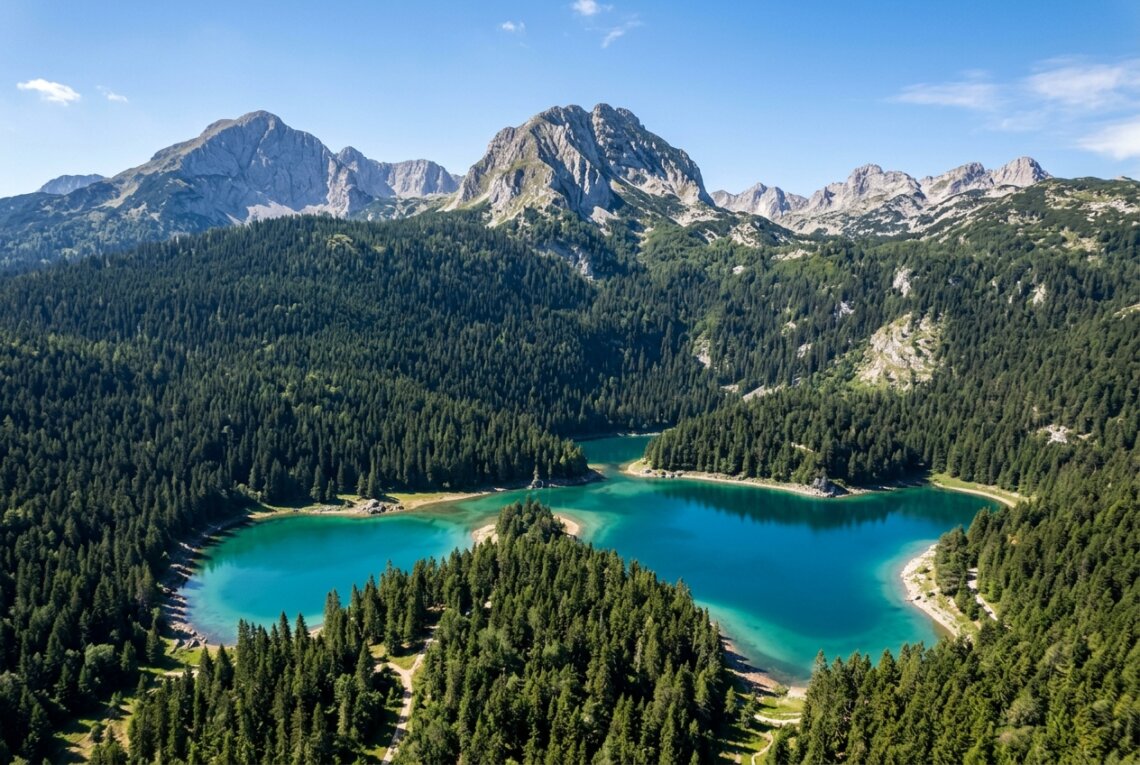
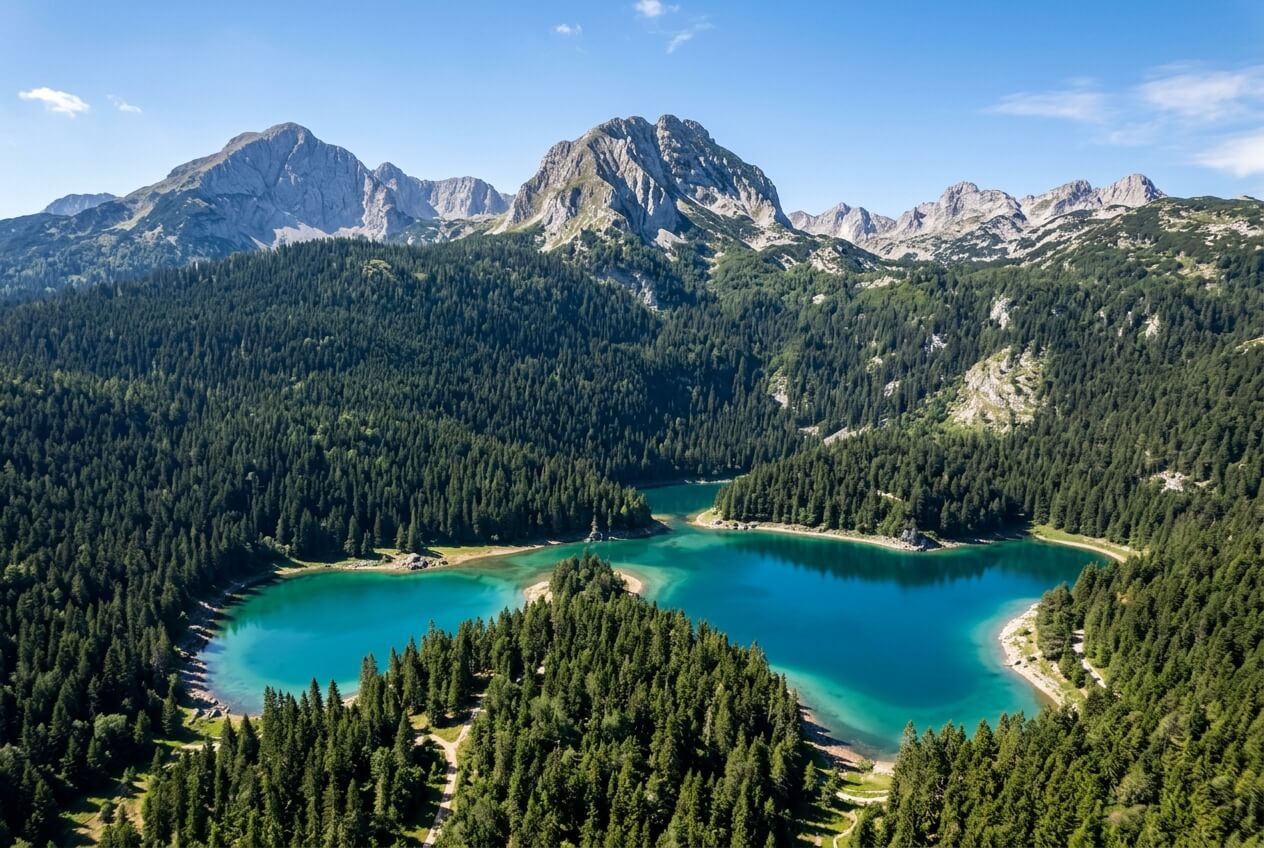
Black Lake Loop (Crno Jezero): A flat, well-marked 3.6-kilometer path circling Durmitor’s largest and most famous lake, reachable on foot from Žabljak in about 20 minutes.
Lokvice Viewpoint: A short uphill walk from Black Lake to a rocky outcrop with sweeping views back over the water and surrounding peaks.
Vrelo Bukovica: A gentle riverside walk to a natural spring at the foot of a forested cliff, just outside Žabljak.
Why Visit:
These trails deliver Durmitor’s signature scenery — glacial water, dense pine, and jagged peaks — in an hour or two, with no special fitness or gear required.
3. Moderate Day Hikes
For hikers wanting more elevation and distance without a multi-day commitment, several routes climb into Durmitor’s high alpine terrain.
Recommended Routes:
Škrčka Lakes: A 5–6 hour round trip through forest and high meadow to a pair of remote glacial lakes with a mountain hut nearby.
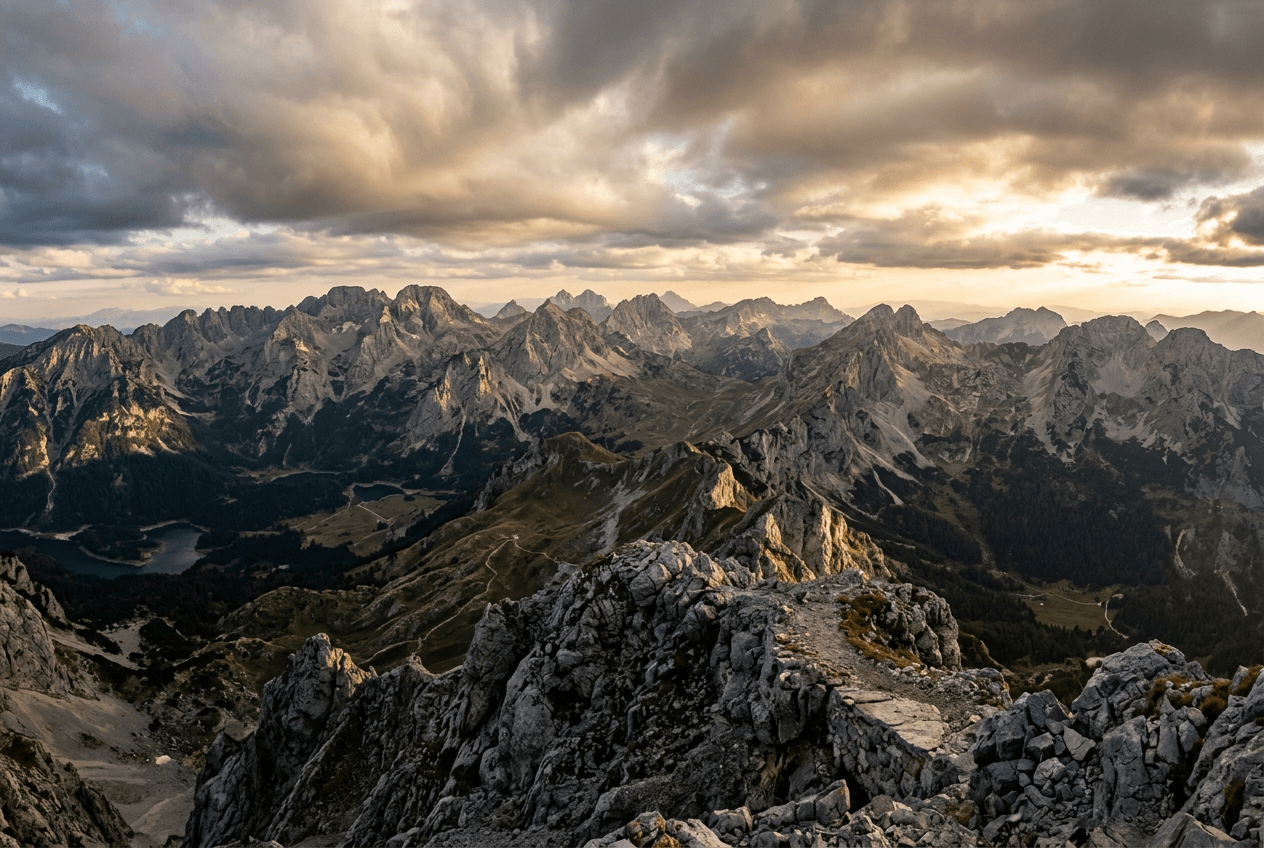
Međed (Bear Peak): A moderately strenuous climb to one of the park’s most accessible summits, with panoramic views over the entire Durmitor massif.
Sedlo Pass: A scenic ridge walk connecting several valleys, often used as an approach route for the longer Durmitor Ring trek.
Practical Tips:
– Start early to avoid afternoon storms, which build quickly over the high peaks in summer.
– Carry more water than expected — reliable sources thin out above the treeline.
– Trekking poles help on the loose limestone scree common on Durmitor’s steeper descents.
4. The Classic Multi-Day Trek: The Durmitor Ring
The Durmitor Ring (Prstenovi Durmitora) is the park’s signature multi-day route, looping through the heart of the massif past a string of its glacial lakes.
Route Overview:
Duration: 2–4 days depending on pace and chosen detours.
Difficulty: Moderate to strenuous, with significant elevation gain and some exposed ridge sections.
Typical Start: From Žabljak via Black Lake, looping past Škrčka Lakes and Sedlo Pass before returning.
Why Hike It:
The ring trek packs in nearly everything Durmitor is known for — dense pine forest, bare limestone ridgelines, and a chain of impossibly still mountain lakes — with simple mountain huts along the way offering a bed and a hot meal.
5. Climbing Bobotov Kuk: Montenegro’s Iconic Peak
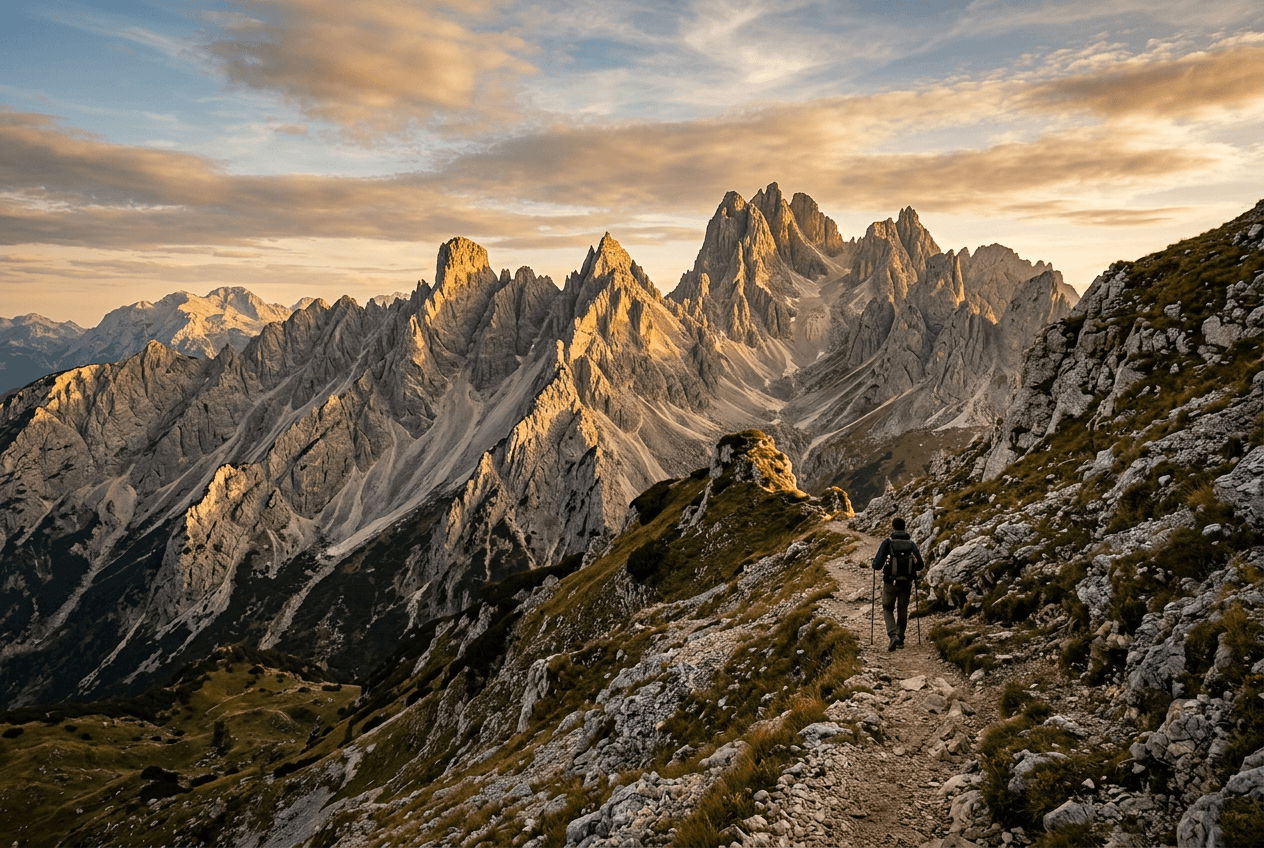
At 2,523 meters, Bobotov Kuk is Durmitor’s highest summit and one of the most popular serious hikes in the country.
Main Route:
Via Sedlo Pass: The standard approach, a long but non-technical scramble over scree and rock to the summit ridge.
Duration: A full day round trip from Žabljak, typically 7–9 hours including the drive to the trailhead.
Final Scramble: The last stretch to the summit involves exposed rock and a short, simple via-ferrata-style section with fixed cables.
Essential Gear:
– Sturdy hiking boots with good grip — the summit scramble is steep and loose underfoot.
– A local guide is strongly recommended for first-time visitors, as the trail markings thin out near the top.
– The standard climbing season runs June through September; snow can linger on shaded sections into early summer.
6. Black Lake and Nearby Viewpoints
Even hikers not attempting a summit will find dramatic scenery within easy reach of Žabljak.
Crno Jezero (Black Lake): Actually two connected lakes joined by a narrow strait, ringed by dense pine forest and framed by Međed peak.
Curevac Viewpoint: A short drive and walk to one of the best panoramic overlooks of the entire Durmitor massif.
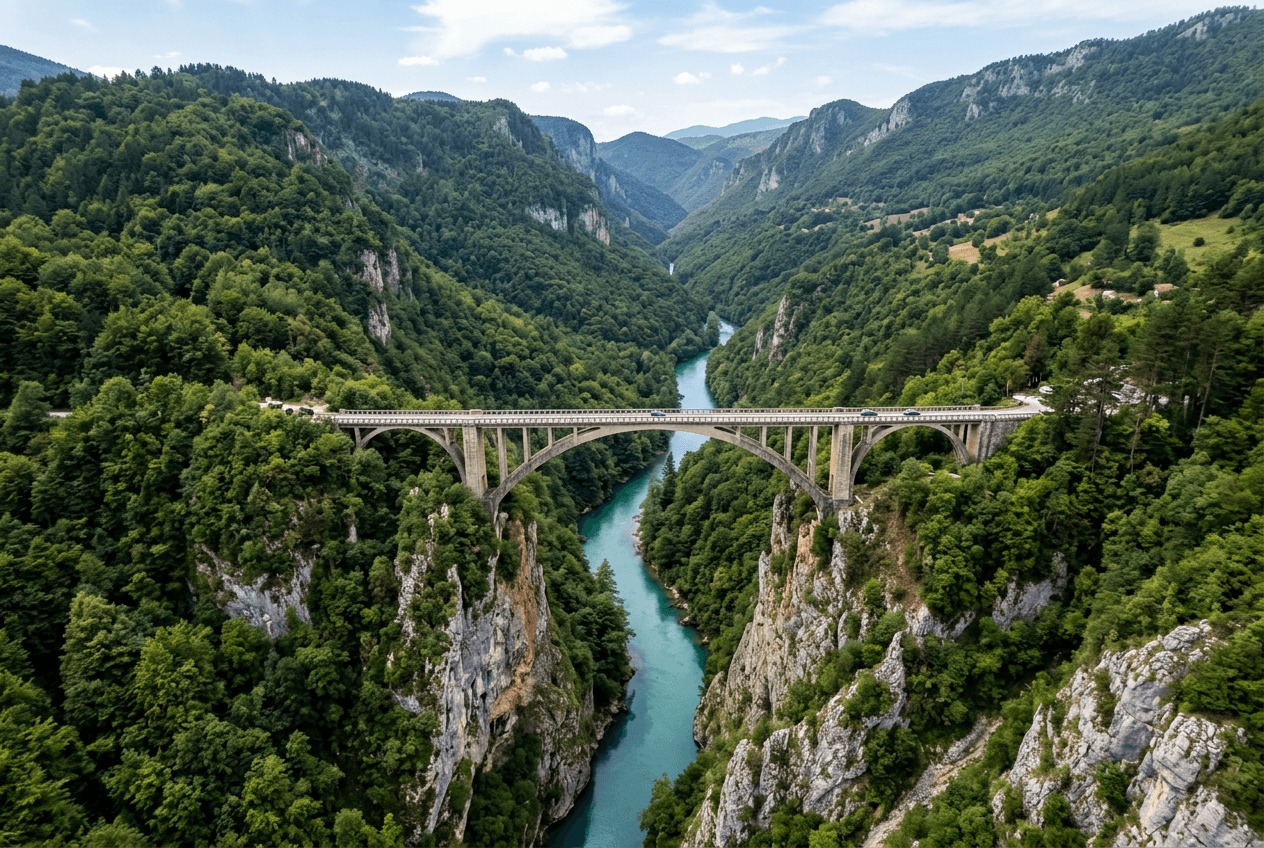
Tara Canyon Viewpoint near Đurđevića Tara Bridge: A dramatic overlook of the canyon below, with a striking arched bridge in the foreground.
Tip: Early morning is best for photographing Black Lake, when the water is calmest and reflects the surrounding peaks most clearly.
7. Tara Canyon and Rafting Combo
The Tara River Canyon, on the park’s eastern edge, is one of the deepest canyons in Europe and a natural complement to a few days of hiking.
Worth Combining:
Whitewater rafting: Half-day and full-day trips run along the Tara’s turquoise rapids, with operators based near the canyon and in Žabljak.
Đurđevića Tara Bridge: A striking five-arch bridge spanning the canyon, with a zip line for those wanting an aerial view instead.
Canyon-rim trails: Several short walks along the rim offer canyon views without the commitment of a rafting trip.
Why Visit:
Splitting a Durmitor trip between mountain trails and a day on the Tara gives a fuller sense of the region — vertical limestone peaks above, a 1,300-meter-deep gorge below.
8. Wildlife and Alpine Flora to Look Out For
Durmitor’s mix of forest, scree, and high alpine terrain supports one of the Balkans’ richest concentrations of wildlife.
Brown bears and wolves: Present in the park’s deeper forests, rarely seen but part of why Durmitor remains one of Europe’s wilder protected areas.
Chamois: Commonly spotted on rocky slopes above the treeline, especially around Bobotov Kuk and Sedlo Pass.
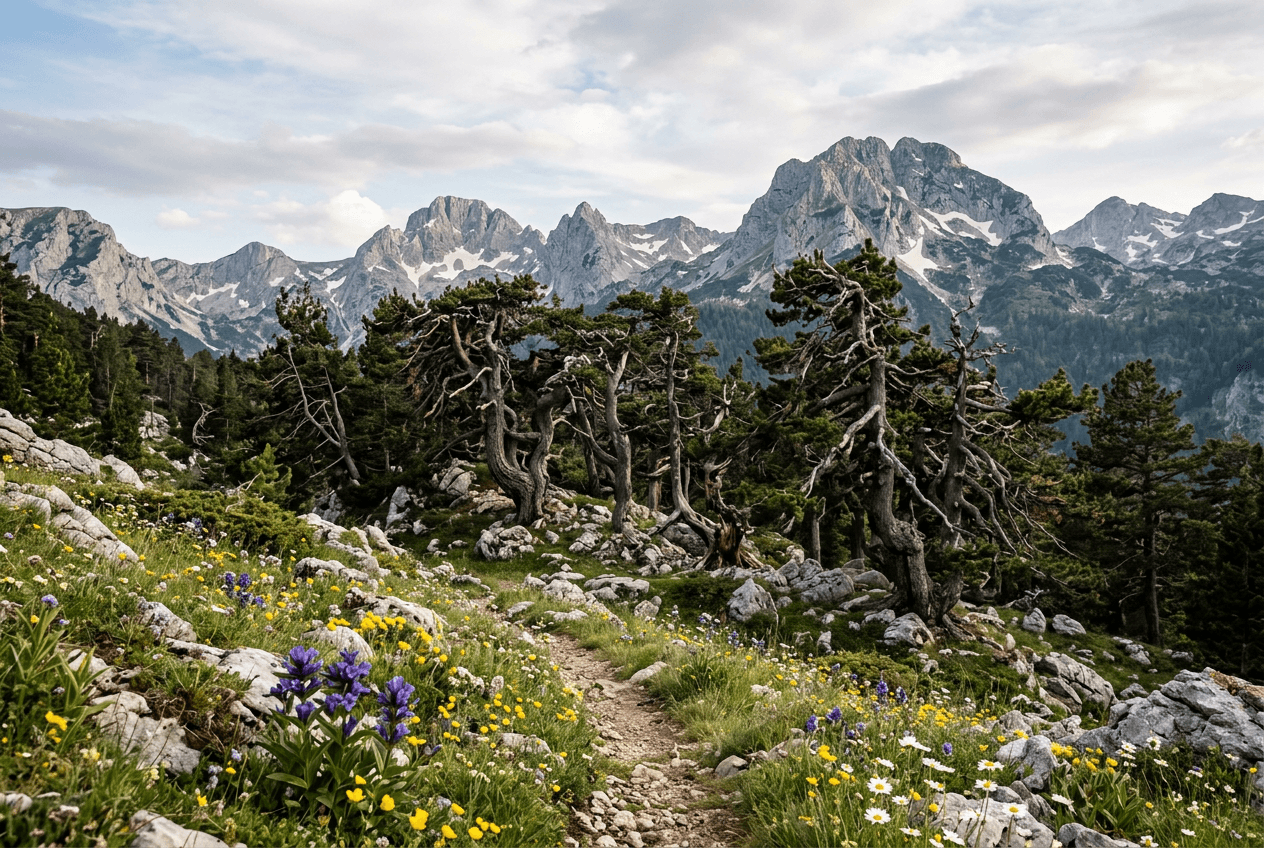
Munika pine: A rare Bosnian pine species found here, with individual trees in the park estimated at over 1,000 years old.
Hikers are asked to stay on marked trails to protect this slow-recovering high-mountain ecosystem.
9. Practical Tips: Permits, Weather, Gear, and Mountain Huts
A little preparation goes a long way in Durmitor’s high-mountain terrain.
Quick Tip List:
– A modest park entrance fee applies, payable at checkpoints or online in advance.
– Weather shifts fast even in summer; pack a waterproof shell and warm layers regardless of the forecast.
– Mountain huts along the Durmitor Ring serve simple meals and dorm-style beds — book ahead in peak season.
– Mobile coverage is patchy above the treeline; download offline maps before setting out.
– Hiring a local guide for Bobotov Kuk or the full Durmitor Ring is inexpensive relative to the safety margin it adds.
10. Best Time to Visit and Seasonal Considerations
Timing makes a real difference to both trail conditions and crowds in Durmitor National Park.
Late June–September: The main hiking season, with huts open and snow generally cleared from the high routes.
July–August: Warmest and busiest, with the clearest trail conditions but the highest chance of afternoon thunderstorms.
September: Cooler, quieter, and often the best visibility of the season — many experienced hikers consider it the ideal month.
Outside this window: Snow turns Žabljak into a small ski destination, but high routes become dangerous without mountaineering experience.
Conclusion
From the easy lakeside loop around Crno Jezero to the exposed scramble up Bobotov Kuk, Durmitor National Park packs an outsized range of hiking into a compact corner of northern Montenegro. Its combination of glacial lakes, ancient pine forest, and one of Europe’s deepest canyons makes it just as rewarding for a relaxed day trip as for an ambitious multi-day trek.
Ready to plan your hike through Durmitor National Park? Whether you’re after an easy walk around Black Lake, a full day climbing to Montenegro’s second-highest peak, or a multi-day loop through the park’s mountain lakes, Žabljak is your gateway. Pack your boots, book a hut, and head for the Balkans’ wildest mountains.